- Home
- Mould and condensation
Mould
Mould grows where humid air meets a cold wall.
A family produces ten to fifteen litres of water vapour a day: showers, cooking, laundry, breathing. If the air cannot get out, that water settles on the coldest surfaces. Bleach and paint do nothing about it.
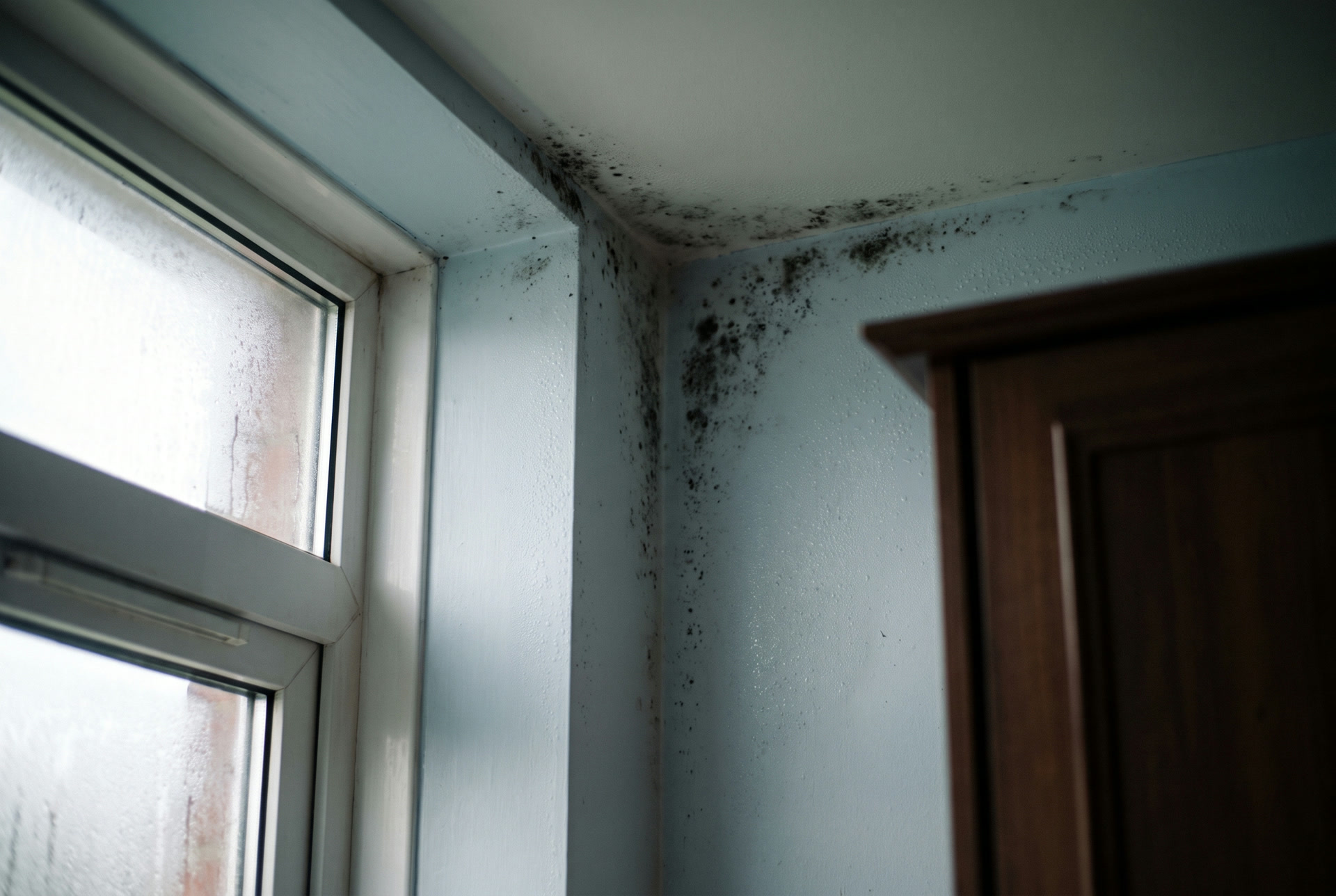
What you see
Black dots turning into patches, in ceiling corners, behind furniture pushed against the wall, around window frames, in the bathroom. Misted windows in the morning. A stale smell. Often in a north-facing bedroom, or a flat where laundry dries indoors.
Mould is not water ingress: it grows on a wall that is damp at the surface, not wet in depth. A reading tells the difference in ten minutes.
Where it comes from
Too much vapour, not enough air. New, very airtight windows with no trickle vents, a recirculating cooker hood, a tumble dryer in the living room. The moisture in the air has no way out.
A cold spot. An outside wall corner, a concrete lintel, a party wall unheated on the other side: vapour condenses there first.
Irregular heating. A room heated then switched off sees its walls drop below the dew point every night.
What we do
We measure: surface moisture, wall temperature, and we check there is no ingress or rising damp behind the mould.
We get the air out: trickle vents in the windows, an extractor in bathroom and kitchen, mechanical ventilation when the home calls for it.
We insulate the cold spot: insulating render or lining on the corner or lintel that condenses.
We treat and repaint: fungicide, removal of affected plaster if needed, anti-condensation or breathable paint. The painting is done by the same group.
Health
Mould spores worsen asthma and allergies, especially in children. In Brussels the Region runs an indoor air analysis service on medical referral, the CRIPI, through Bruxelles Environnement. We mention it when the situation calls for it.
Questions
The questions we get.
How do you stop mould on walls?
By lowering the humidity of the air and warming the wall: ventilate, heat steadily, move furniture off the wall, insulate the cold spot. Cleaning without doing that means cleaning every two months.
Does bleach work?
It whitens the patch and kills some spores at the surface. It changes nothing about the cause, and the wall stays cold and damp. The mould comes back, often wider.
Is it dangerous to health?
For most people it is irritating rather than dangerous. For someone with asthma, a small child or a frail person, it is a real aggravating factor. Mould covering more than an A4 sheet deserves treatment without delay.
Tenant or landlord, who pays?
If the cause is a building defect, insulation, lack of ventilation, water ingress, it is in principle the landlord. If it comes down to use, laundry dried without airing, heating switched off, the discussion is different. A measured report serves both.
Also
What often goes with it.
Your request
Describe what you see.
We come and measure within five working days, and the written quote follows within 48 hours. The visit is free and you are not committing to anything.

- Phone0467 88 59 52
- WhatsAppSend a photo
- Email[email protected]
- CompanyFreitas Group SRL
BCE 1041.906.890 - LanguagesEnglish, Français, Português
- HoursMon to Fri, 7am to 7pm
Sat, 9am to 1pm