- Home
- Water ingress
Water ingress
Water rarely comes out where it went in.
A stain on the ceiling under the terrace, a wall that weeps after a storm, a cellar flooded through the garage wall. The entry point is sometimes three metres from the stain. We trace the path before we repair.
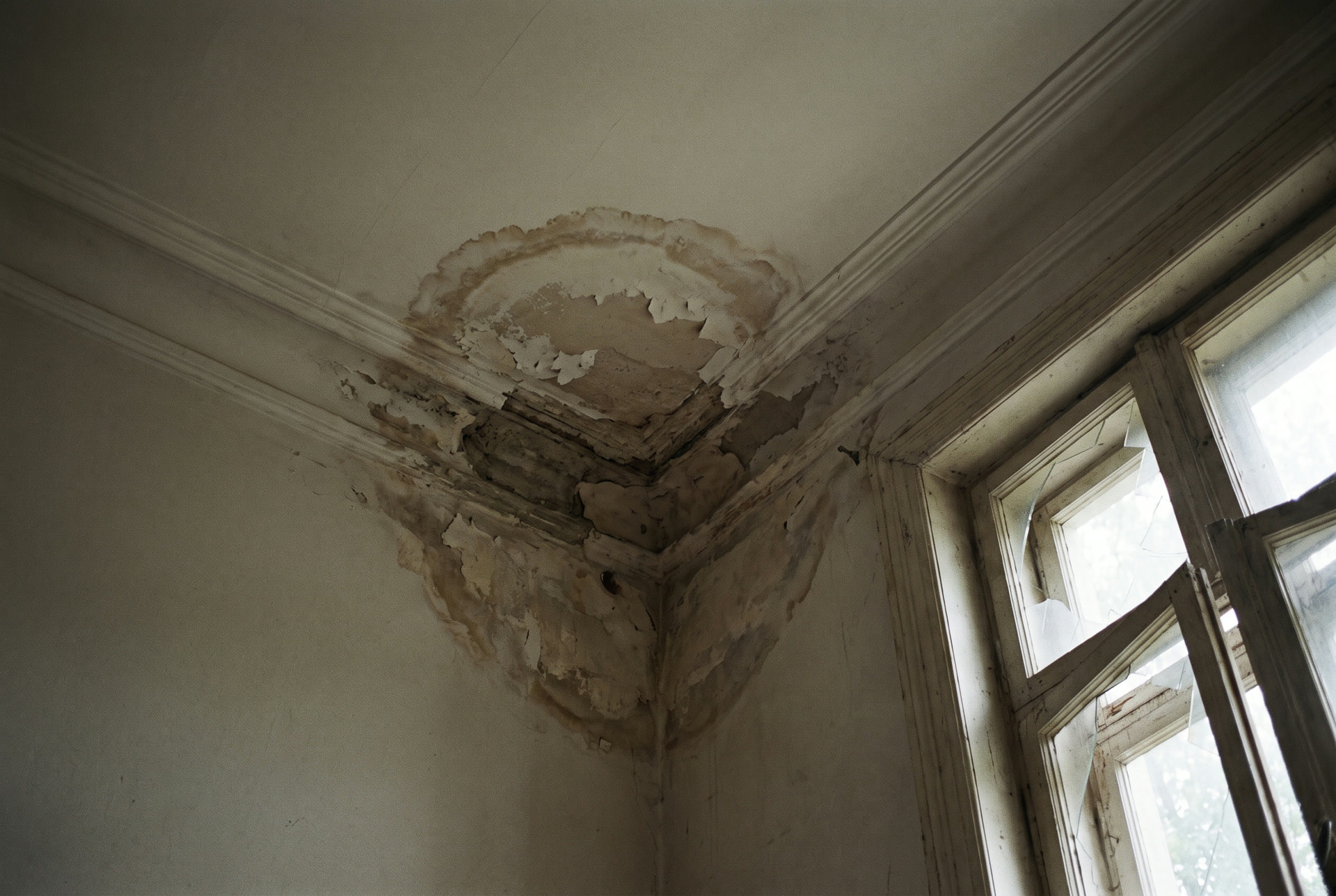
What you see
A stain that appears or grows after rain, then fades in dry weather. A ring on the ceiling under a terrace, a balcony or a flat roof. A party wall damp at the height of the neighbour's terrace. Water coming out at the foot of a door frame, or a basement garage taking water through the wall.
The link with the weather is the signature of water ingress. A wall that stays damp under the July sun has another cause.
Where the water usually gets in
The terrace. An open joint at the foot of the wall, an upstand missing or too low, a fall that sends water back towards the house, an overflowing outlet. Tiles that meet the wall with no waterproof skirting are a Brussels classic.
The buried wall. A gap between a hedge and the façade, soil banked up against the wall, a blocked drain. Water runs down the wall and crosses where the mortar is weakest.
The party wall. The neighbour's terrace or cornice, higher than your floor, discharging into the shared wall.
The façade. Eroded brick joints, a crack, a window sill with no drip, driving rain from the south-west.
The flat roof. Tired roofing felt, upstands peeling away, a blocked outlet.
What we do
We trace the path. Inspection inside and out, moisture readings, and if needed a water test: we hose one area at a time and watch where it comes out. It takes longer than a sales visit, and it is what stops us repairing the wrong place.
We cut the entry. Redo the foot-of-wall joint and terrace upstand, dig out and seal the buried wall, clear or lay a drain, repoint the façade, repair the flat roof. If the entry is on the neighbour's side, we write it down: nothing gets repaired at theirs without their agreement.
We repair the damage. Drying, render, plastering, paint. The same group does the renovation.
What we do not do
A pipe leak hidden in a slab needs leak detection with a plumber's equipment: camera, tracer gas. If the signs point to a leak rather than ingress, we tell you and let you call the right trade. We come back for the reinstatement.
Questions
The questions we get.
How do you stop water getting into a wall?
By finding the entry, not by treating the exit. A waterproof render applied inside moves the problem: the water comes out further along. We find the joint, the upstand, the crack or the soil responsible, repair there, and the wall dries by itself.
Does home insurance cover water ingress?
Often for a sudden event, a storm, a burst, and for the damage that follows. Rarely for slow ingress due to a worn joint or waterproofing, treated as lack of maintenance. A dated, measured, photographed report carries weight in that discussion.
The water comes from the neighbour. Who is responsible?
In principle, whoever's structure lets the water through. But a serious report checks your own side first before pointing at the other, or it does not hold up. We write down what we measured, on which side, and touch nothing at the neighbour's without agreement.
Is water ingress a hidden defect?
It can be, if it existed before the sale and was not visible. Those are questions of deadlines and proof: a dated technical report, made early, is what gives the file a chance.
Also
What often goes with it.
Your request
Describe what you see.
We come and measure within five working days, and the written quote follows within 48 hours. The visit is free and you are not committing to anything.
- Phone0467 88 59 52
- WhatsAppSend a photo
- Email[email protected]
- CompanyFreitas Group SRL
BCE 1041.906.890 - LanguagesEnglish, Français, Português
- HoursMon to Fri, 7am to 7pm
Sat, 9am to 1pm